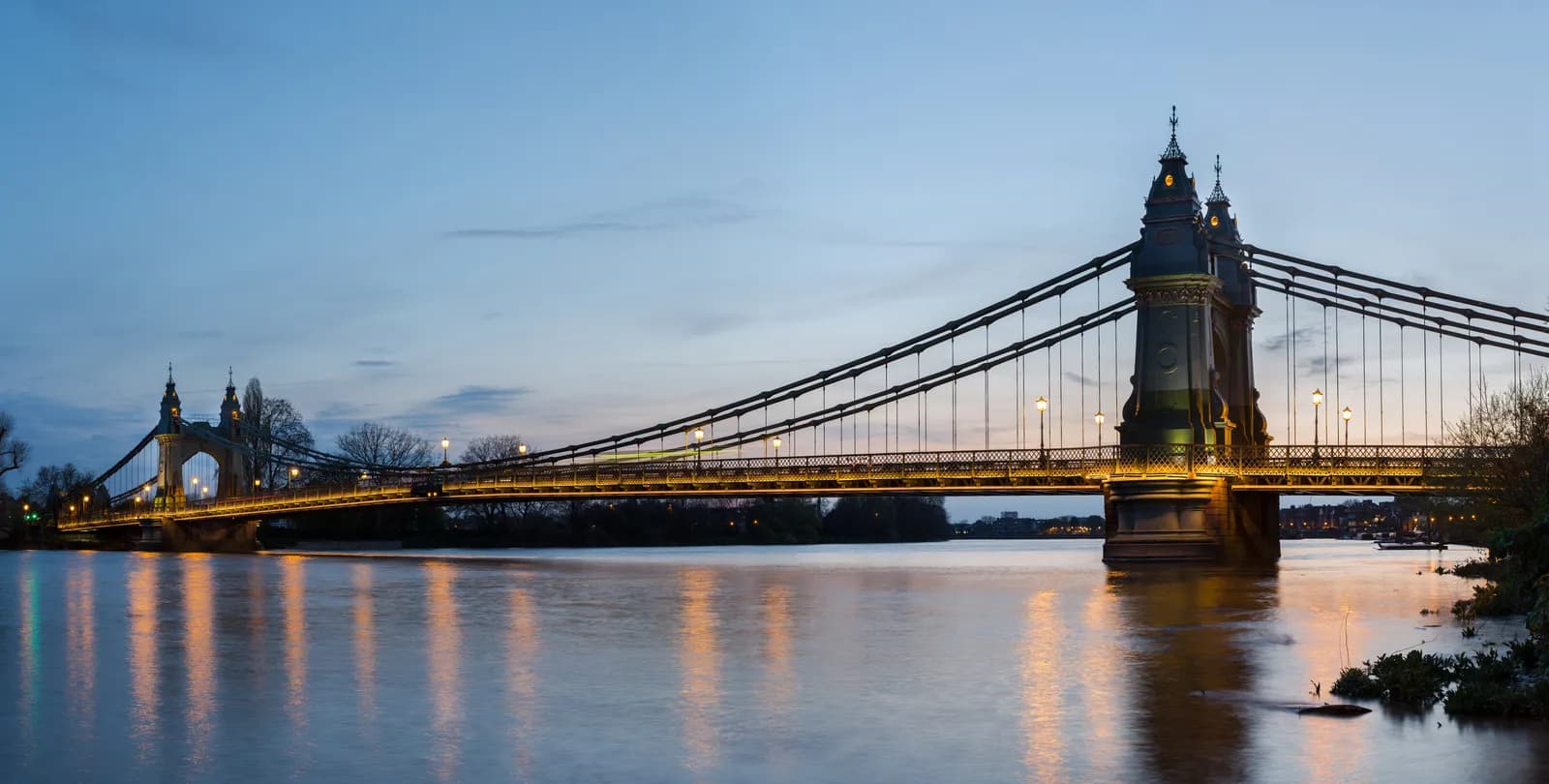
A Landmark in Limbo
Hammersmith Bridge, the Grade II* listed suspension bridge that has connected Hammersmith to Barnes since 1887, remains closed to motor vehicles more than six years after safety concerns first forced its closure. The bridge, designed by Sir Joseph Bazalgette and opened by the Prince of Wales, continues to shape daily life for residents on both sides of the Thames.
The Closure Timeline
The bridge closed to motor vehicles in April 2019 after engineers discovered critical structural faults in the suspension system. Microfractures in the iron pedestals that support the bridge's suspension chains prompted an immediate ban on vehicles weighing more than two tonnes. A full closure to all traffic followed in August 2020 when engineers identified additional safety risks.
Pedestrians and cyclists regained access in July 2021 via a temporary stabilisation scheme that cost £2.9 million. The stabilisation works involved installing temperature sensors and temporary mesh wraps around the pedestals to prevent debris from falling into the river. However, motor vehicles remain prohibited, and the bridge operates under strict weight and capacity limits.
Engineering Challenges
The bridge's age and unique cast-iron construction present significant restoration challenges. The suspension chains and their supporting pedestals, made of cast iron that is brittle by modern standards, require careful assessment before any major works can begin. Engineers must balance the need for structural reinforcement against the bridge's listed status and historic value.
Transport for London and Hammersmith and Fulham Council have commissioned a series of engineering studies to determine the full scope of required repairs. Initial estimates suggested restoration costs could reach £141 million, though more recent assessments have revised this figure. The complexity of working on a 137-year-old suspension bridge over a tidal river means any repair programme will extend over several years.
Impact on Local Residents
The closure has fundamentally altered travel patterns for residents in Hammersmith, Barnes, and surrounding areas. Journeys that previously took minutes now require detours via Chiswick Bridge or Putney Bridge, adding significant time to commutes. Local bus routes have been rerouted, and the 209 and 419 services no longer cross the river at this point.
Riverside businesses on both sides report mixed effects. Some pubs and restaurants along the Thames Path have seen increased footfall from pedestrians using the reopened crossing, while others mourn the loss of passing vehicle traffic. The bridge's closure has also contributed to congestion on alternative routes, particularly during peak hours.
Funding and Political Debates
Responsibility for funding the bridge's restoration has been a point of contention between Hammersmith and Fulham Council, the Greater London Authority, and central government. The council has argued that the bridge is a strategic London asset and that costs should be shared across these tiers of government.
In 2021, the government announced £8.7 million for initial stabilisation works and a feasibility study for full restoration. However, the bulk of restoration funding remains unresolved. The council has explored innovative funding models, including tolling and private investment, though these proposals have faced opposition from local residents and transport campaigners.
What Happens Next
Engineers continue to monitor the bridge's condition through an array of sensors installed during the stabilisation works. Temperature fluctuations, particularly during London's increasingly hot summers, present ongoing risks to the cast-iron structure. The council has indicated that any full restoration will require the bridge to close entirely for an extended period, potentially two to three years.
For now, the bridge remains a symbol of Victorian engineering ingenuity and contemporary infrastructure challenges. Pedestrians and cyclists can still enjoy the views from its deck, while motorists must continue to seek alternative routes across the Thames.