In 1745, two Scottish gardeners established a modest nursery on six acres in Hammersmith that would become the most celebrated plant establishment in the world. James Lee of Selkirk and Lewis Kennedy of Perthshire transformed a former vineyard into a horticultural empire that introduced fuchsias, dahlias and the China rose to British gardens.
The Scottish Partnership
James Lee arrived in London after training under Philip Miller at Chelsea Physic Garden, later serving as gardener to the 7th Duke of Somerset at Syon House and to Lord Islay at Whitton Park. Lewis Kennedy had established himself as gardener to Lord Wilmington at Chiswick before founding "The Vineyard" nursery in Hammersmith around 1745. The two men formed a partnership that would last until Kennedy's retirement in 1818, creating a business that horticultural writer John Claudius Loudon later described as "deservedly considered the first in the world."
Plants That Changed the Nation
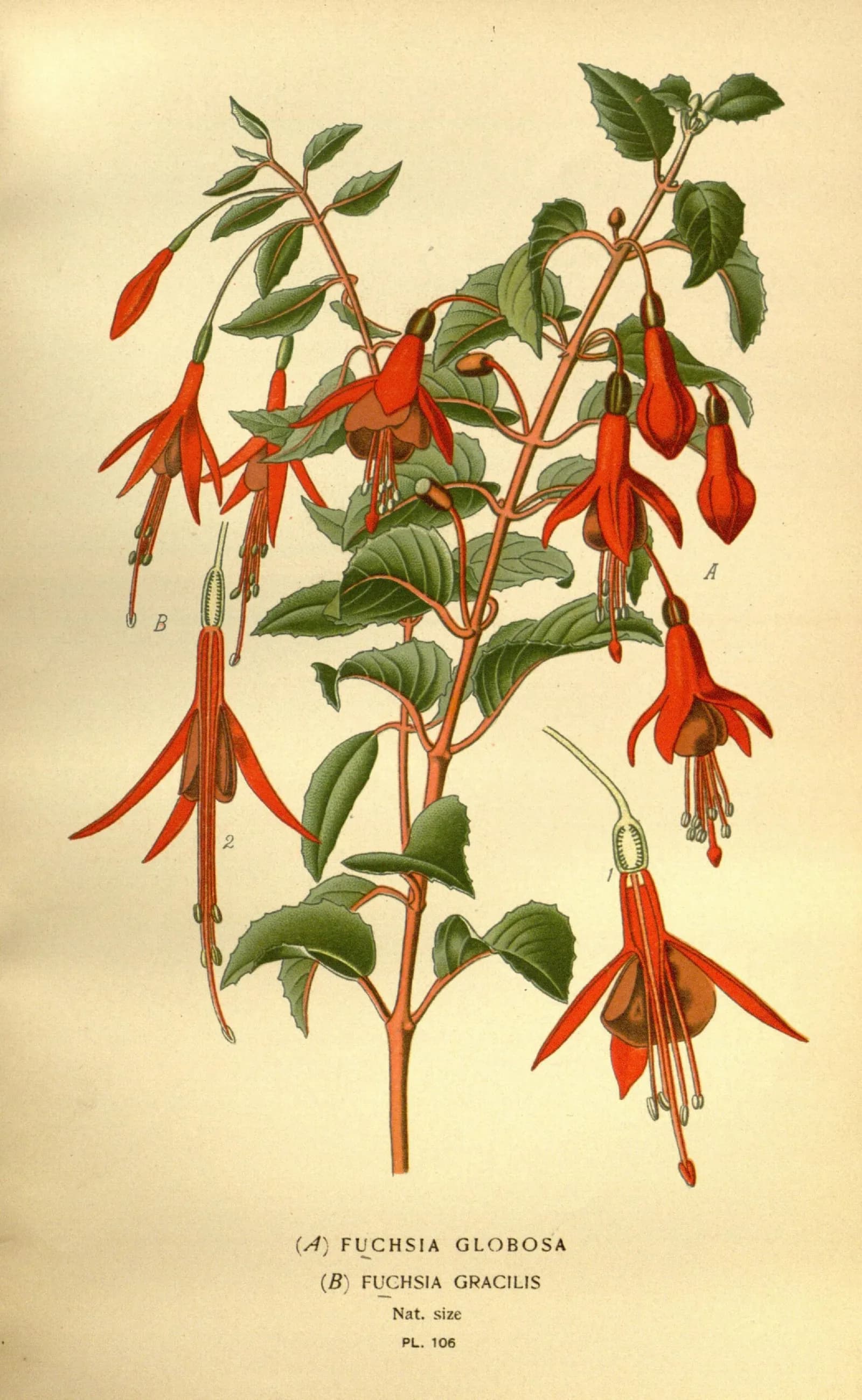
The firm of Lee and Kennedy introduced several species that remain staples of British gardens today. In 1787, they imported the China rose (Rosa chinensis), the first repeat-flowering rose seen in Britain. The following year, they introduced the fuchsia (Fuchsia magellanica), initially commanding a guinea per plant. By 1807, they had brought the dahlia to public cultivation. The nursery also popularised standard roses in 1818, adapting a French technique that transformed how roses were displayed in gardens.
Royal Patronage and Global Reach
Lee and Kennedy's reputation attracted international clientele. During the Peace of Amiens in 1802–03, they supplied plants to Empress Josephine at Château de Malmaison. Her bill by 1803 reached £2,600. John Kennedy secured special permits to travel to France during the Napoleonic Wars to advise the Empress on her collection. Tsar Alexander I's family visited the Hammersmith nursery grounds, with Grand Duchess Catherine Pavlovna making a special point of seeing the establishment. The firm maintained correspondence with plant collectors across the Americas and at the Cape of Good Good Hope, sourcing heaths, ixias and pelargoniums.
Scientific Contributions
The partners advanced botanical knowledge beyond commerce. Lee corresponded with Carl Linnaeus and published "An Introduction to Botany" in 1760, which ran to five editions. In 1774, they issued a comprehensive "Catalogue of plants and seeds." John Kennedy, Lewis's son born in Hammersmith on 8 October 1759, contributed notes to "The Botanist's Repository" and authored "Page's Prodromus" in 1817. The firm regularly provided plant material for illustrations in "Curtis's Botanical Magazine."
A Family Dynasty
The nursery passed through three generations. James Lee died in 1795, succeeded by his son James (1754–1824). Lewis Kennedy retired to Eltham, Kent in 1818, where he died in 1782; his son John Kennedy (1759–1842) continued the partnership with the younger James Lee. The third generation saw John Lee (c.1805–1899) and Charles Lee (1808–1881) take the reins. John Lee retired in 1877, marking the end of the family firm.
From Vineyard to Olympia
The nursery grounds in Hammersmith eventually disappeared beneath urban expansion. Part of the site now lies under Kensington (Olympia) station, originally called Addison Road. The firm relocated first to Ealing, then to Feltham as London grew westward. Lewis Kennedy's grandson (1789–1877) continued the family tradition in garden design, creating landscapes at Chiswick House, Drummond Castle and Buckhurst Park.
A Lasting Horticultural Legacy
Lee and Kennedy's influence persists in gardens across Britain. The fuchsia, dahlia, China rose and standard rose that they first made commercially available remain among the nation's favourite plants. Their nursery set a standard of excellence that shaped British horticulture for a century, proving that two Scottish gardeners with six acres in Hammersmith could transform the botanical landscape of an entire nation.